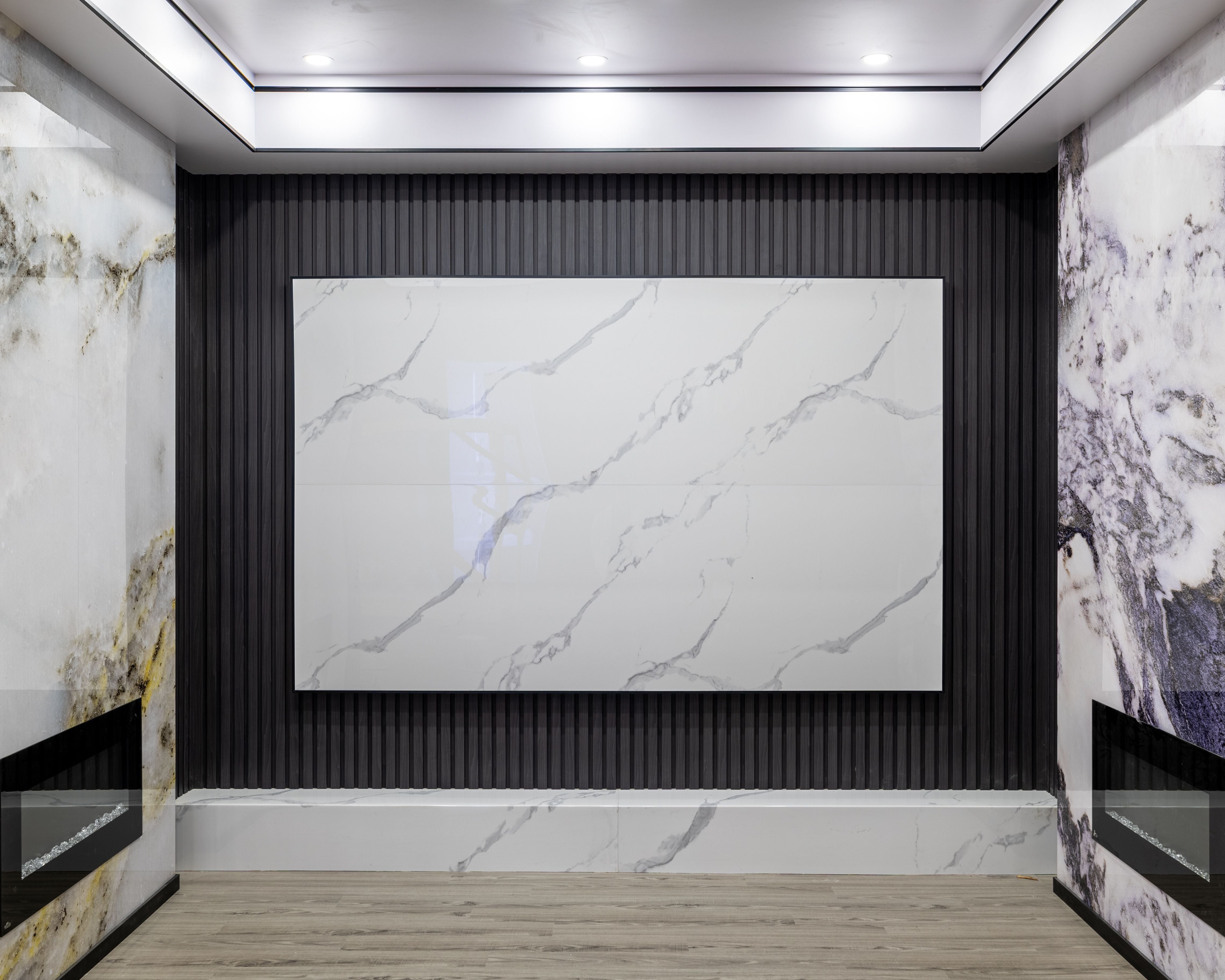


Install like a pro: 5 steps to a perfect slatted wall

The Professional Guide to Installing Slatted Wall Panels: Part 1
Are you looking to add a modern, high-end finish to your interior space? PVC composite wall panels are one of today’s most practical and stylish solutions for wall renovations. Compared with traditional wood panels or basic WPC materials, Richvaugh’s PVC composite wall panels offer excellent durability, water resistance, and a clean premium finish designed for long-term performance.
One of the most common questions homeowners ask is: Can I achieve a professional-looking result on my own?
The answer is yes, as long as you use the right tools, the right adhesive, and a proper installation method.
In this guide, Richvaugh shares the essential materials, tools, and installation basics for a clean and professional wall panel installation.
Check out this 30-second time-lapse to see how easily a Richvaugh feature wall comes together!
First step:The Right Tools and Materials

A clean installation starts before the first panel touches the wall. In many projects, installation failure is not caused by the panel itself, but by poor preparation or the wrong adhesive.
Core Materials
Richvaugh PVC Composite Wall Panels
The foundation of the project. These panels are designed for interior wall applications where a durable and modern finish is needed.
Silicone Adhesive
This is the recommended adhesive for Richvaugh PVC composite wall panels. It provides flexibility, long-term bonding performance, and helps reduce the risk of future peeling.
Important Note:
We do not recommend using PL construction adhesive for this type of panel. While it may have a strong initial grab, it can become too rigid over time and may not perform as well as silicone adhesive for long-term wall panel installation.
Installation Clips
For large feature walls or commercial projects, clips can be used together with adhesive to improve panel stability and alignment.
Foam Adhesive (Optional)
If the wall surface has dips or uneven areas, foam adhesive can help fill small gaps and provide additional support behind the panel.
Professional Tool Kit
-
Laser level
-
Tape measure
-
Pencil or marker
-
Caulking gun
-
Table saw or jig saw
-
Drill or driver for clip installation
A laser level is especially useful because it helps ensure the first panel is installed straight. Once the first panel is aligned correctly, the rest of the installation becomes much easier.
2. Step-by-Step Installation Guide

Step 1: Measure and Plan
Accurate measurements are essential for a successful installation.
Measure the full height and width of the wall area where the panels will be installed. Then calculate how many panels are needed based on the effective coverage width of each panel, not just the panel’s total width.
A good rule is to order 10% extra material to cover cutting waste, corner adjustments, and possible future repairs.
This step is also the time to decide:
-
where the first panel will start
-
whether the layout should be centered
-
where edge trims or finishing pieces may be needed
Step 2: Prepare the Wall Surface

Before installation, make sure the wall is:
-
dry
-
clean
-
free of dust
-
structurally sound
Remove outlet covers, switch plates, or any moldings that may interfere with the panel layout.
If the wall has minor uneven areas, foam adhesive can be used selectively during installation to help support the back of the panel. For larger irregularities, it is better to correct or level the wall surface before proceeding.
A flat wall will always give the best final appearance.
Step 3: Cut and Mark the Panels

This is where material quality makes a difference.
For straight cuts, use a table saw or miter saw to achieve a clean and accurate edge. Richvaugh PVC composite wall panels are designed to cut cleanly, helping reduce chipping and rough edges.
When cutting around electrical outlets or switches:
-
Measure the exact position carefully
-
Mark the outline on the back of the panel
-
Use a jigsaw for the opening
For easier fitting later, it is often helpful to make the opening slightly larger than the box.
Step 4: Apply the Silicone Adhesive

Apply the silicone adhesive to the back of the panel in a gentle S-shape or vertical bead pattern.
Do not apply adhesive too close to the panel edges, since excess adhesive may squeeze out when the panel is pressed onto the wall.
If the wall has small low spots, foam adhesive can be added in those specific areas for extra support. However, adhesive should not be used as a substitute for correcting a severely uneven wall.
Step 5: Install and Interlock the Panels

Start with the first panel at the chosen edge or corner of the wall. Use a laser level to ensure the first panel is perfectly vertical. This first panel sets the alignment for the entire installation.
Once the first panel is in place, continue with the next panel by locking it into the previous one through the panel’s interlocking profile or joint system.
Press each panel firmly and check alignment as you go.
For larger installations, feature walls, or high-use commercial spaces, installation clips and screws can be added along the sides for extra support. This combined method helps improve long-term stability.
3. Finishing Touches and Maintenance
After installation, check the panel lines, edges, and trim details carefully.
Because PVC composite wall panels can be cut cleanly, many installations require very little finishing work when measured properly. In many cases, the panels can sit neatly against ceilings, baseboards, or adjacent trims for a clean, modern appearance.
Allow the adhesive to cure fully before applying heavy pressure or attaching mounted accessories nearby. A full curing period of about 24 hours is recommended in most cases.
For maintenance, simply wipe the panels with a damp cloth. PVC composite wall panels are designed for easy care and everyday interior use.
Final Thoughts
Installing PVC composite wall panels is not complicated when the correct materials and methods are used. Careful measurement, clean cuts, proper adhesive application, and correct alignment are the keys to achieving a professional finish.
At Richvaugh, we always recommend focusing on three essentials:
-
accurate planning
-
the right adhesive
-
a straight first panel
These basics make the biggest difference in the final result.
Want to ensure a flawless finish without the headaches?
Even with the best materials, small errors can lead to big problems down the road. Stay tuned for our next article:
"Richvaugh Pro Tips: Common Installation Mistakes and How to Avoid Them"
We’ll dive deep into the traps most DIYers fall into—from choosing the wrong adhesive to alignment disasters—and show you exactly how to get it right the first time.
Ready to Transform Your Space?
Now that you know the basics, it’s time to choose the perfect style for your home. Browse our Full PVC Composite Collection to find the texture and color that matches your vision.
Prefer to see the quality in person? Visit our showroom in Markham to experience the Richvaugh difference. Our experts are on-site to provide professional advice and help you calculate exactly what you need.
-
📍 Visit Us: 271 Amber St, Markham, ON
-
Explore our full collection of wall panels here 🌐 Browse Products
-
📞 Get a Quote: 647-687-8329