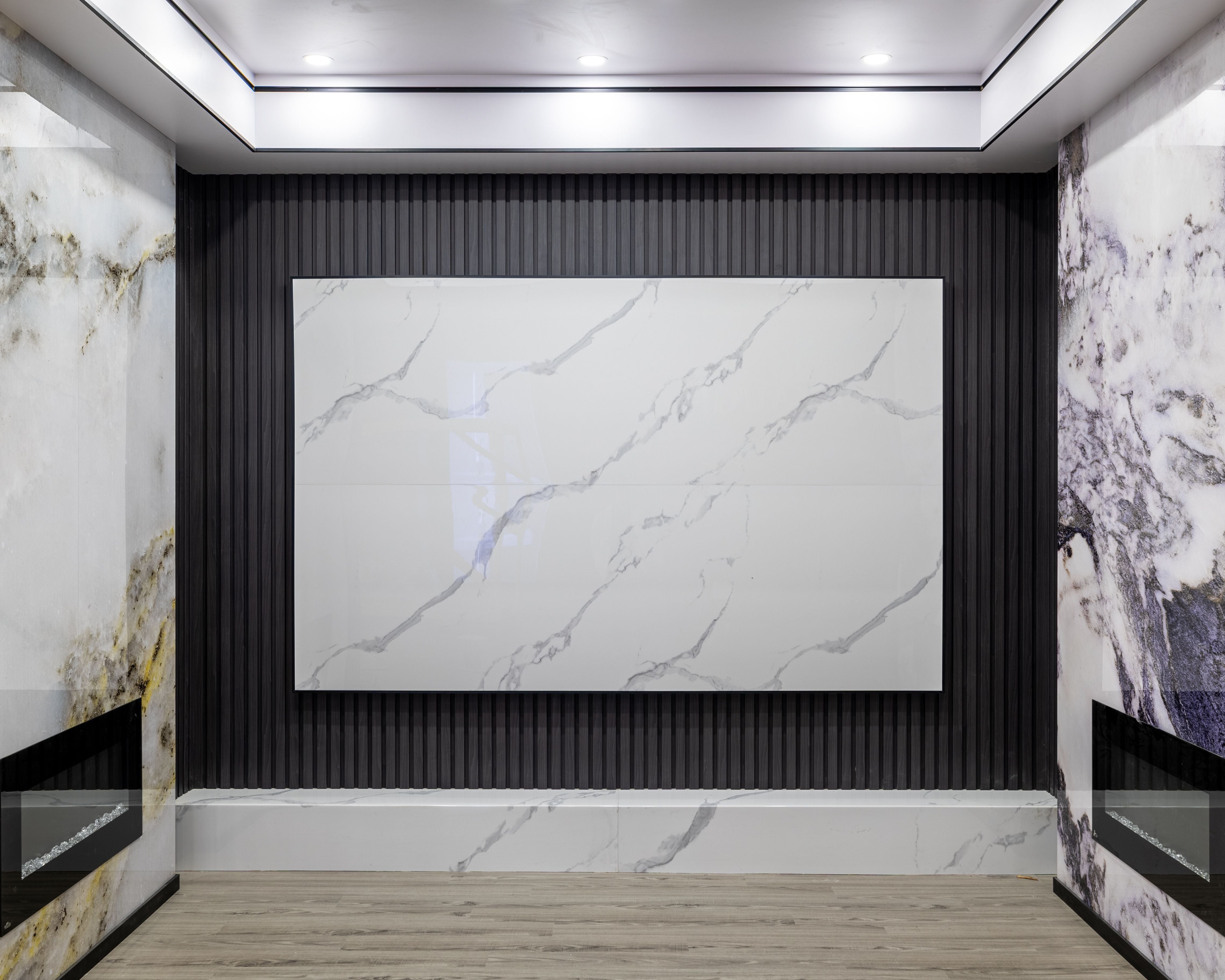


Acoustic Slat Wall Panels vs. Durable Slat Wall Panels: Which Wall Panel Is Better for Real Homes?

If you’re shopping for a wall panel upgrade, you’ve probably seen acoustic slat wall panel styles everywhere. They look modern, add texture, and can help with echo in a room. But here’s the big question: are acoustic slat panels the best choice for long-term use—especially in condos, basements, or high-humidity spaces?
In this blog, we’ll compare acoustic slat wall panels (often made with MDF slats) vs. our durable slat wall panels (wood-fiber composite with PVC). We’ll also touch on fluted wall panel styles, because many customers consider them as an alternative for the same modern look.
1) What is an acoustic slat wall panel?
An acoustic slat wall panel usually means:
-
Vertical slats (the “wood slats” look)
-
A sound-absorbing backing (often felt)
-
A design that reduces echo and improves room acoustics
Many popular options on the market use MDF slats (medium-density fiberboard) with a felt backing. MDF is common because it’s cost-effective and easy to manufacture with a consistent finish.
Good fit for: living rooms, bedrooms, offices, media rooms (when humidity is controlled).
2) The MDF reality: why many acoustic panels don’t love moisture
Let’s be honest: MDF can look great indoors, but it’s not the most forgiving material when moisture becomes a factor.
Common issues with MDF-based acoustic slat panels
-
Moisture sensitivity: MDF can swell or soften if it absorbs moisture.
-
Surface damage: it can chip more easily compared to tougher composite panels.
-
Mold risk in damp areas: mold needs moisture + organic material + time. If a wall is damp (basement, exterior wall, poor ventilation), MDF + trapped moisture behind panels can create conditions where mildew/mold can happen.
Important note: Not every acoustic panel is MDF, and not every MDF panel will “mold.” But if you’re installing in a space where humidity is real, MDF is simply more risky than a more water-resistant wall panel material.
If your project is a condo with big windows, a basement, a washroom-adjacent wall, or any space that gets damp—material choice matters a lot.
3) Our durable slat wall panels: built for real-life use
Our slat wall panel system is made from a wood-fiber composite with PVC (so you still get that wood feeling, but with better durability).
Why composite + PVC is more durable than MDF in daily life
-
Better moisture resistance (less swelling risk)
-
Easier to clean (wipe-friendly surface)
-
More impact resistant for high-traffic areas
-
More stable over time for busy homes and commercial interiors
If your priority is a modern slat look but you want something that handles real life (kids, pets, condo humidity, commercial wear), a durable wall panel material usually wins.
4) Acoustic vs. durable slat wall panels: quick comparison
Acoustic slat wall panels (often MDF + felt)
Pros
-
Helps reduce echo and improve sound comfort
-
Popular modern look
Cons
-
Many versions are MDF, which is more moisture-sensitive
-
Felt backing can trap dust/moisture in certain conditions
-
Not ideal for damp areas or walls with moisture risk
Durable slat wall panels (wood-fiber composite + PVC)
Pros
-
More durable and stable
-
Better for long-term use and easier cleaning
-
Safer choice for condos, basements, and commercial use
Cons
-
If your #1 goal is sound absorption, you may still add acoustic treatment behind or around the wall
5) What about fluted wall panels?
A fluted wall panel gives a similar “vertical texture” look, but it’s usually a continuous grooved surface rather than separate slats. Many customers choose fluted panels when they want:
-
A cleaner, more seamless modern wall
-
Less dust-catching gaps compared to deep slat profiles
-
A softer, luxury feel for feature walls and TV walls
If you like the slat look but want something more minimal, fluted wall panel styles can be a perfect alternative—especially for living rooms, entryways, and condo feature walls.
6) Best places to use each wall panel type
Choose acoustic slat wall panels if:
-
You have a media room / office and want better sound comfort
-
The room is dry, well-ventilated, and humidity is controlled
Choose durable slat wall panels if:
-
You want the slat look but need a more practical material
-
The wall is near windows, an exterior wall, or a basement area
-
You’re doing a condo feature wall, hallway, lobby, or commercial space
Choose fluted wall panels if:
-
You want modern texture with a clean finish
-
You’re doing a TV wall, accent wall, or “luxury meets modern design” style upgrade
7) Shopping checklist: how to avoid the “looks good today, regrets later” wall panel
Before you buy any wall panel, ask:
-
What is the core material? (MDF, plywood, composite, PVC/WPC?)
-
Where is it installed? (dry room vs. basement/condo exterior wall)
-
How is the wall condition? (any moisture history? condensation?)
-
How easy is it to clean and maintain?
-
Do you want sound absorption, or mainly the look?
A lot of people pick “acoustic” panels for the look—then realize they didn’t actually need the acoustic feature, and durability mattered more.
FAQ (SEO-friendly)
Are acoustic slat wall panels always MDF?
Not always, but many common acoustic slat wall panels use MDF slats. Always check the product specs.
Can MDF acoustic panels be used in basements?
They can, but it depends on ventilation and moisture control. If the wall has humidity or moisture risk, a more durable wall panel material is usually safer.
What’s the difference between a slat wall panel and a fluted wall panel?
A slat wall panel has separated slats (more depth and shadow lines). A fluted wall panel is a grooved continuous surface (cleaner and more seamless).
Final thoughts: choose the wall panel that matches your space
If you love the acoustic slat look, it can be a great choice—when the room is dry and sound comfort is your priority. But for many real homes (condos, basements, busy family spaces) a durable slat wall panel made from composite materials can be a better long-term solution.
If you’re not sure which option fits your project, we can recommend the best layout and material based on your wall condition and style goals.